

S O S V I T I
Horizon Europe · 2024–2028
SOSVITI
Sustainable Soil Management and Innovation in Viticulture
SOSVITI (Sustainable Soil Management Decision Support System in Viticulture) is a European research project under the Horizon Europe Marie Skłodowska-Curie Actions (MSCA) Staff Exchanges programme.
Coordinated by the University of Granada in Granada, Spain, it brings together universities, research centres and technology companies from Greece, Spain, Germany and Italy to address the challenges of soil erosion and degradation in vineyards.
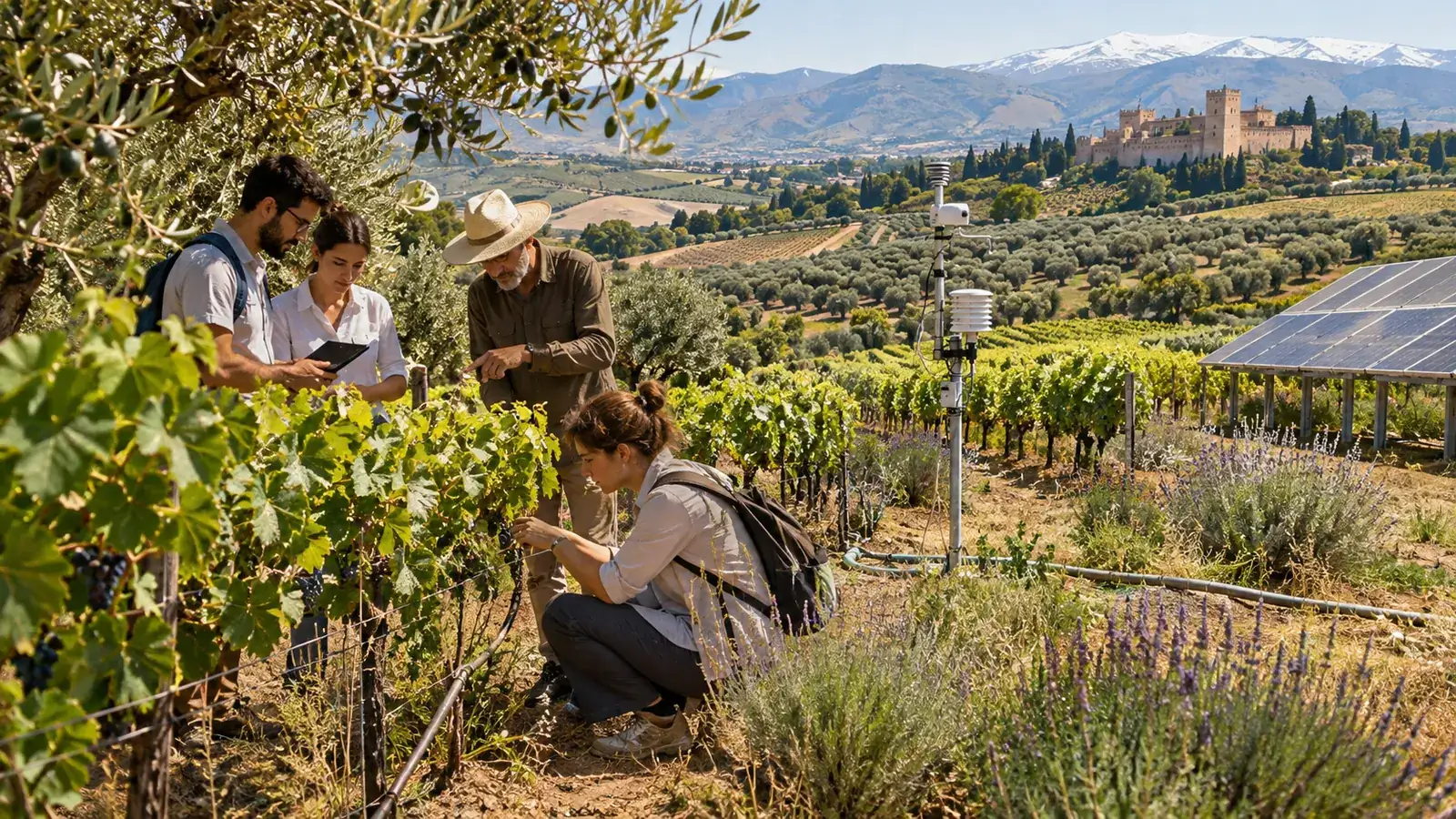
Healthy soil is essential to the long-term future of viticulture. SOSVITI explores how satellite imagery, remote sensing, field observations and advanced data analysis can help winegrowers understand soil conditions, assess erosion risks and make better-informed vineyard management decisions. The project aims to develop a practical digital decision-support system that encourages soil conservation and more sustainable agricultural practices.
Orfanos Estate, based in Patras, Greece, participates as a viticulture and winemaking industry partner.
The estate contributes practical knowledge and data from vineyard and winery operations, while helping to test and evaluate the proposed solutions in a real production setting. It also supports the exchange of expertise between researchers and the wine industry.
Through SOSVITI, Orfanos Estate strengthens its commitment to responsible vineyard management, environmental stewardship and the connection between scientific innovation and everyday winegrowing practice.
Horizon Europe · MSCA Staff Exchanges · Grant Agreement No. 101182765 · 2024–2028
Project coordinator: University of Granada, Granada, Spain · Industry partner: Orfanos Estate, Patras, Greece.
Funded by the European Union
This project has received funding from the European Union’s Horizon Europe research and innovation programme under the Marie Skłodowska-Curie Actions (MSCA) Staff Exchanges (Grant Agreement No. 101182765).
Views and opinions expressed are however those of the author(s) only and do not necessarily reflect those of the European Union or the European Research Executive Agency (REA). Neither the European Union nor the granting authority can be held responsible for them.